Artificial Intelligence is no longer something only large technology companies experiment with. Today, startups, small businesses, and growing teams are using AI to automate repetitive work, analyze information faster, improve customer experiences, and build products with smaller teams.
But adopting AI is not about adding random tools to your workflow. The businesses that gain real value from AI usually start with a simple question: Which part of the business can become faster, smarter, or more scalable with AI?
This guide explains how companies are approaching AI, where it creates real value, and how startups can build a practical AI strategy.
Artificial Intelligence in Business: From Experiment to Real Operations
Artificial intelligence in business means using AI systems to improve how a company operates, makes decisions, communicates with customers, and creates value.
Businesses use AI in different ways:
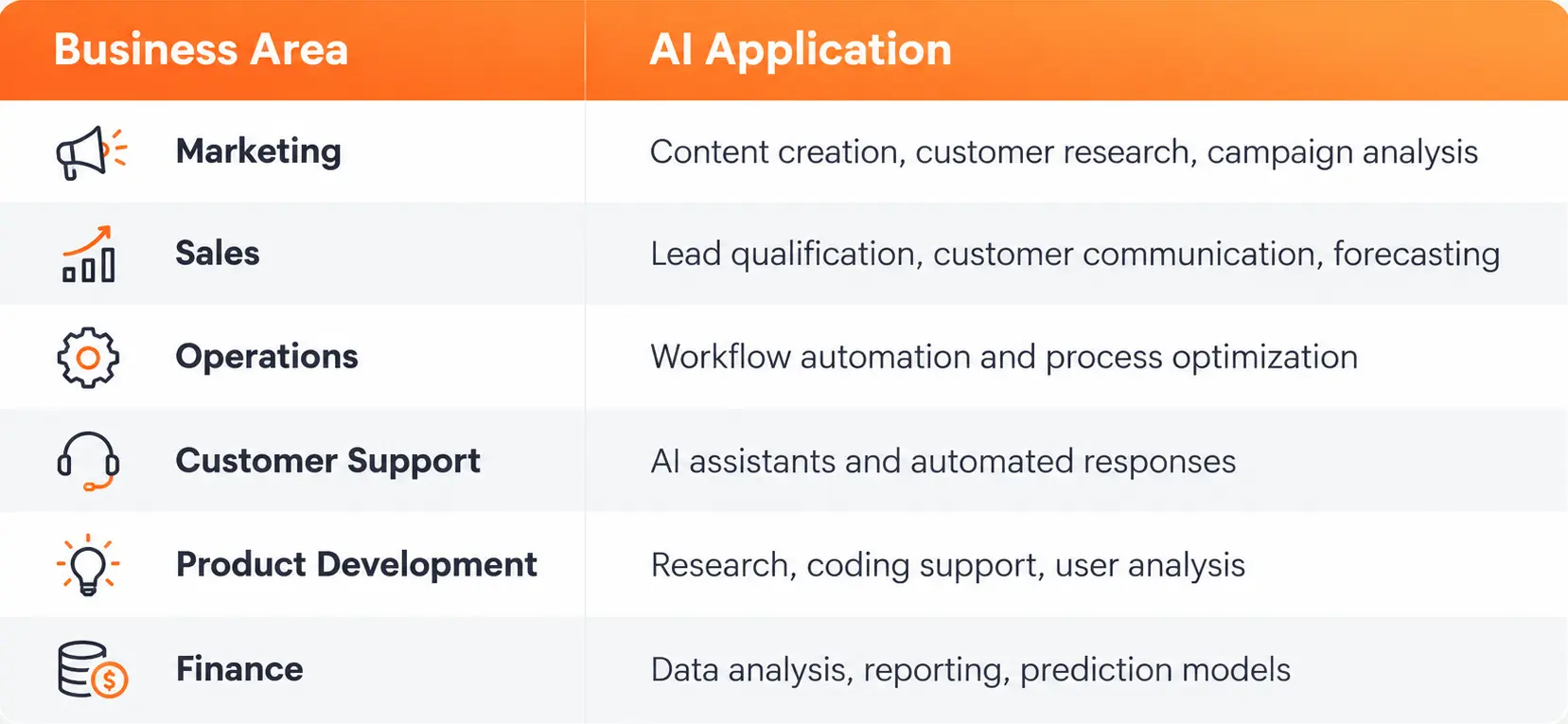
The important shift is that companies are moving from asking "What can AI do?" to asking "Where can AI improve our business process?"
A successful AI implementation usually starts from a business problem, not from choosing a tool.
How Startups Are Using AI to Build Faster
For startups, AI creates a different advantage. Small teams can now handle tasks that previously required hiring multiple specialists or spending large amounts of time manually.
AI for startups is often focused on increasing speed:
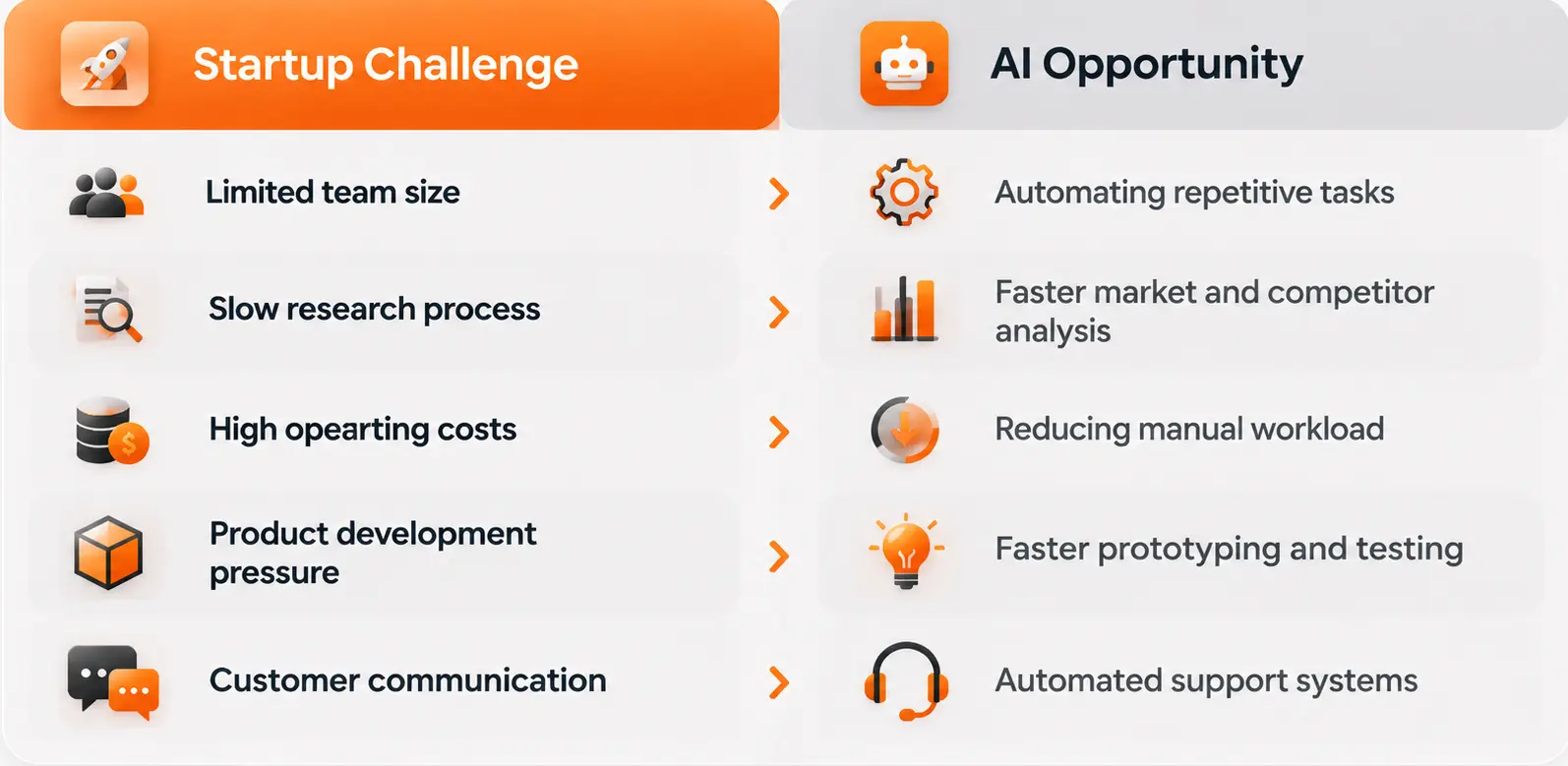
Modern startups are increasingly building around AI from the beginning instead of adding it later. This approach is often described as an AI startup model, where artificial intelligence becomes part of the company's core operation.
The goal is not replacing every human task. The goal is allowing a small team to achieve more with better systems.
Generative AI Changed How Companies Create and Work
Generative AI is one of the biggest changes in business technology because it allows systems to create new content such as text, images, software code, audio, and other digital assets.
Companies are using generative AI for:
Drafting marketing materials
Creating product ideas
Summarizing research
Writing internal documents
Supporting software development
Creating customer communication
However, the value does not come from generating content alone.
The real advantage appears when generative AI becomes connected to business knowledge, internal data, and existing workflows.
A company that only uses AI for occasional tasks gains limited value. A company that integrates AI into repeatable processes can create a stronger operational advantage.
Practical AI Tools for Business Teams
Choosing the right tools depends on the business need. A common mistake is selecting popular AI tools without understanding the workflow they should improve.
AI tools for business usually fall into several categories:
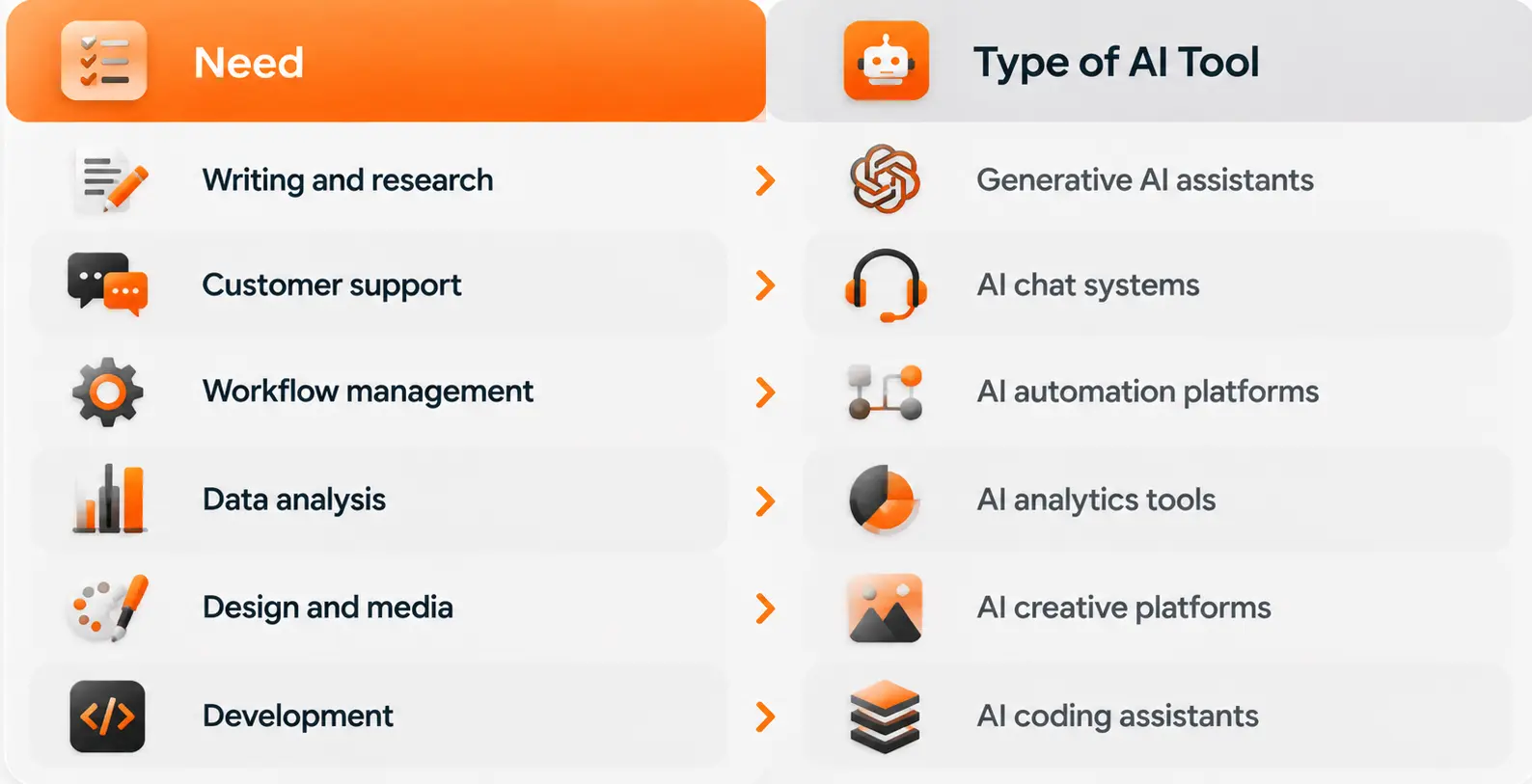
Before adopting any tool, businesses should evaluate:
What problem does this tool solve?
How often will the team use it?
Does it connect with existing systems?
Can the results be measured?
The best tool is not always the most advanced one. It is the one that fits the company's actual workflow.
AI Automation Creates More Efficient Workflows
AI automation focuses on reducing repetitive tasks and creating systems that work with less manual involvement.
Examples include:
Automatically organizing customer requests
Creating reports from business data
Processing documents
Sending personalized customer messages
Managing internal workflows
Automation works best when the process itself is already clear. AI cannot fix a broken workflow; it can make a good workflow faster.
Building an AI Adoption Strategy
Many companies start using AI without a clear plan. They test multiple tools but do not create measurable results.
An effective AI adoption strategy should include these steps:
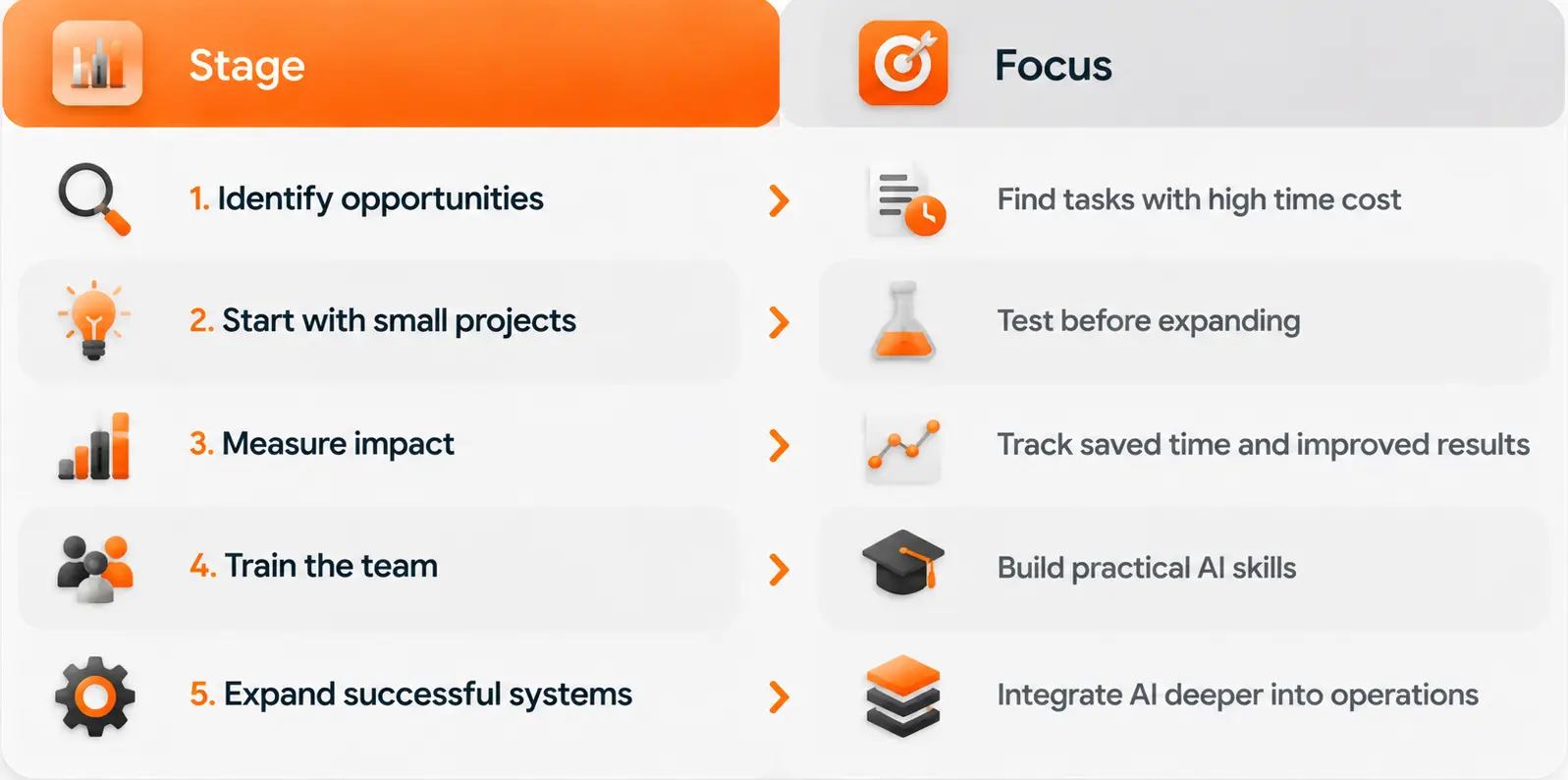
A company does not need to transform everything at once. The strongest approach is usually starting with one valuable workflow and improving it over time.
AI Business Applications Across Different Industries
AI business applications are expanding across almost every industry.
Examples include:
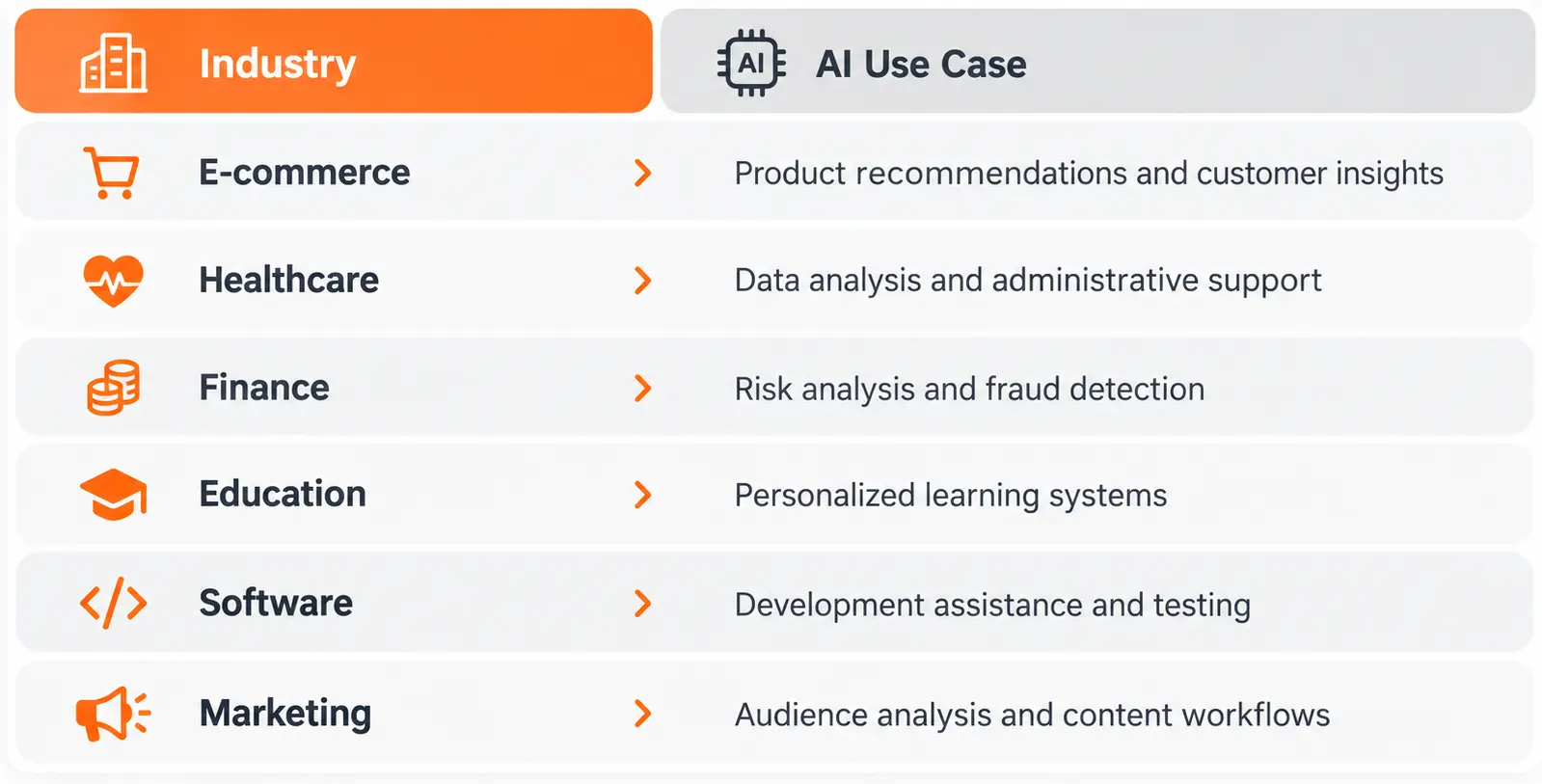
The common factor is not the industry itself. It is whether the business has processes where AI can improve speed, accuracy, or decision-making.
Current AI Trends Changing Business Models
AI trends are moving beyond simple assistants. Businesses are exploring systems that can complete more complex tasks, connect information sources, and support decision-making.
Important trends include:
AI-powered automation
AI agents for business workflows
Smaller specialized AI models
AI integration inside existing software
More focus on AI governance and security
The future of AI will likely focus less on standalone tools and more on AI becoming part of everyday business systems.
The Future of AI for Companies and Entrepreneurs
The future of AI is not only about smarter technology. It is about how businesses redesign the way they work.
For founders, AI creates opportunities to build companies with smaller teams and faster execution cycles.
For established businesses, AI creates opportunities to improve existing operations and create new customer experiences.
The companies that benefit most will not necessarily be those using the most AI tools. They will be the companies that understand where AI creates meaningful business value.
A Practical Starting Point for Businesses
A simple starting framework:
List repetitive tasks inside your business.
Find processes that consume the most time.
Test AI solutions on one specific workflow.
Measure the improvement.
Expand only after seeing real results.
AI adoption is not a technology project alone. It is a business improvement process.
FAQ
Can a small business use AI without hiring a technical team?
Yes. Many AI tools are designed for non-technical users. Small businesses can start with existing solutions for tasks like customer communication, research, content production, and workflow automation.
How much budget does a company need to start using AI?
There is no fixed budget. The cost depends on the type of AI system, number of users, and level of integration required. Many companies start with affordable tools before investing in custom solutions.
Is building an AI startup different from a traditional startup?
Yes. An AI startup usually places artificial intelligence closer to its core product, operation, or customer experience rather than using it only as a supporting tool.
What information should a business prepare before adopting AI?
Businesses should understand their workflows, available data, customer needs, and the specific problems they want AI to solve before selecting tools.
Will AI completely replace human teams in businesses?
AI is more commonly used to support employees by reducing repetitive work and improving decision-making. The value often comes from combining human expertise with AI capabilities.
How can a company measure the success of an AI project?
A company can measure an AI project by defining clear goals before implementation. Common measurements include reduced operating time, lower costs, improved customer response speed, higher productivity, and better decision-making quality.
What is the difference between using AI tools and building an AI-powered business?
Using AI tools means adding artificial intelligence to existing workflows, such as using an AI assistant for research or automation. Building an AI-powered business means designing products, services, or operations where AI is a central part of the business model.
How can businesses protect sensitive information when using AI systems?
Businesses should review how AI providers handle data, define access permissions, avoid sharing unnecessary sensitive information, and create internal guidelines for employees who use AI tools.
Should a company develop its own AI system or use existing AI platforms?
The choice depends on business goals, available resources, and technical requirements. Many companies start with existing AI platforms and consider custom solutions when they need specific capabilities or deeper integration.
What skills should employees learn to work effectively with AI?
Employees benefit from learning how to communicate with AI systems, evaluate AI outputs, understand workflow automation, manage data responsibly, and combine AI capabilities with their professional expert

Fatemeh Jahangard
Technology & AI Writer at PinerookFatemeh Jahangard covers AI, emerging technologies, and digital innovation for Pinerook, focusing on how technology shapes startups and industries.
 Seen first.