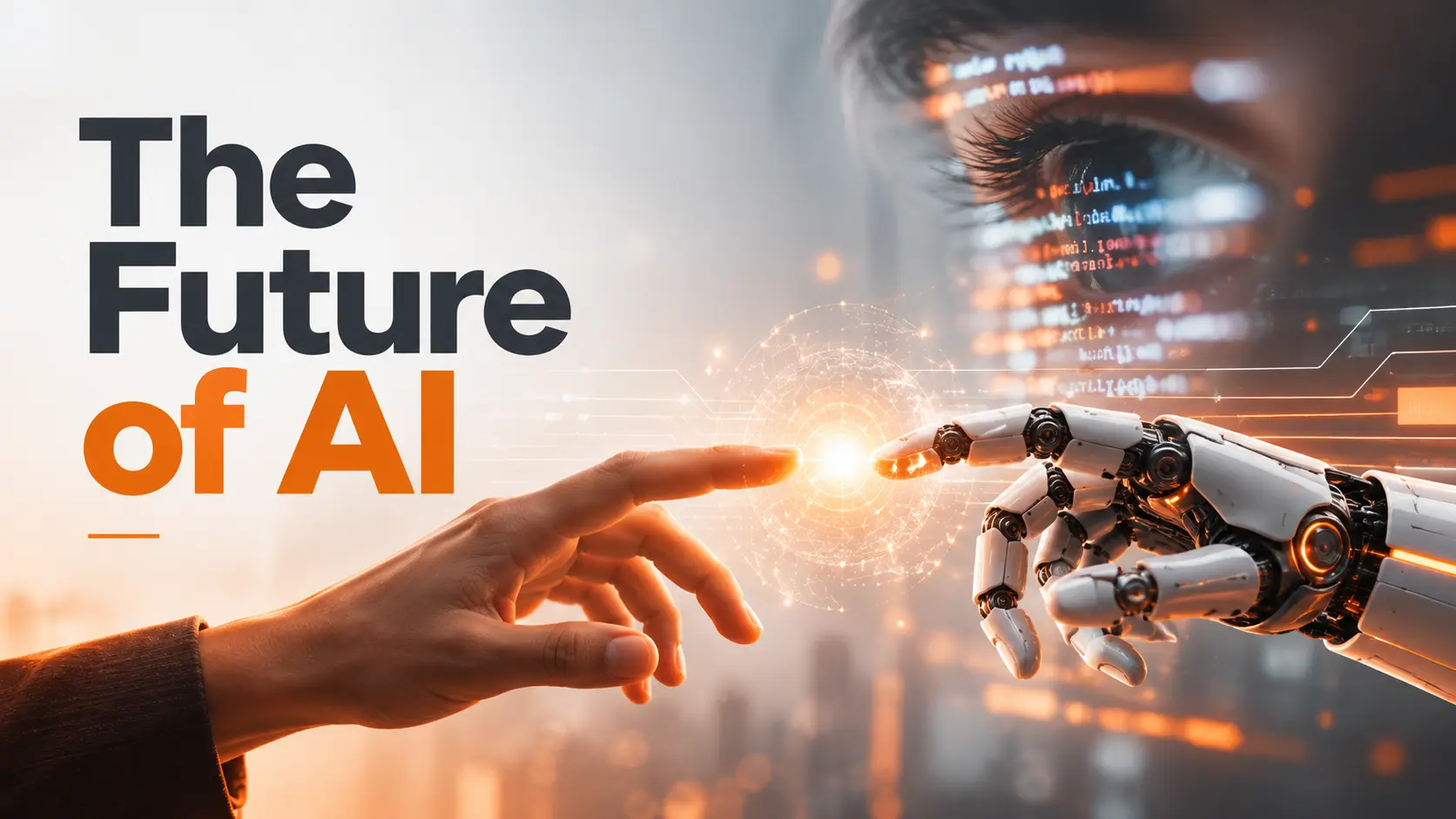
When people talk about the future of AI, the conversation often starts with bigger models, smarter chatbots or new tools. But after following how this technology has developed, I think the biggest change will happen somewhere else.
AI is moving from being a tool that helps people complete individual tasks into a technology that can support decisions, manage workflows and become part of how companies operate.
The future of AI is not only about what machines can do. It is about how people and businesses adapt to a world where intelligent systems become part of everyday work.
From AI Tools to Intelligent Systems
The first wave of AI made people faster. It helped write content, analyze information, create designs and answer questions.
The next stage is different.
Instead of asking AI to complete one small task, people will increasingly work with systems that understand a goal and help move a process forward.
The difference is important:
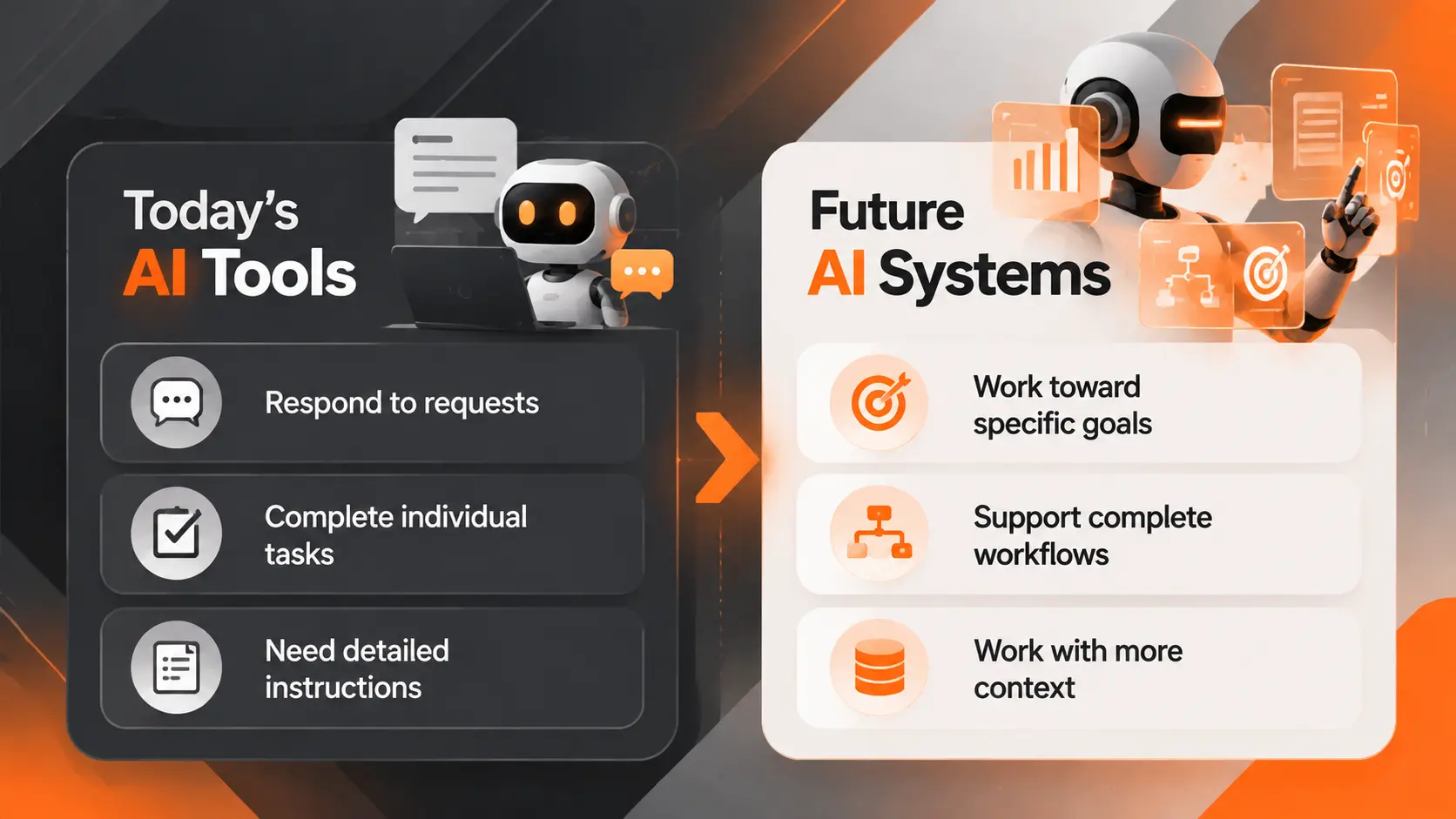
This does not mean AI will work without limitations. The quality of results will still depend on the data, instructions, human review and the way businesses build their processes around these systems.
The companies that understand this shift will have a clearer advantage than those that only collect new AI tools without changing how they work.
The Rise of AI Agents
One of the most important areas shaping the future of AI is the growth of AI agents.
Traditional AI tools usually wait for a prompt and return an answer. AI agents are designed to handle multiple steps to reach a goal.
For example, an AI agent could help a business research competitors, organize information, prepare reports or manage parts of a customer workflow.
The important change is not simply that AI becomes smarter. It is that AI becomes more connected to real processes.
A marketing team may use AI to analyze customer behavior. A software team may use it to review code and identify issues. A startup may use AI systems to handle repetitive operational tasks.
The value comes from combining AI capability with a clear business purpose.
The Next Generation of Generative AI
Generative AI introduced millions of people to the possibilities of artificial intelligence. Tools that could create text, images, code and other forms of content changed how people think about technology.
However, the next stage will likely move away from general use cases.
Businesses are looking for AI systems that understand specific industries, internal data and unique workflows.
A company does not need an AI system that knows everything. It needs a system that understands its own challenges.
This is why future AI development will focus on:
More specialized models
Better connection with company data
More accurate results
Easier integration with existing software
The competitive advantage will not come from simply having access to AI. It will come from knowing where to apply it.
AI in Business Transformation
Many companies are experimenting with AI, but the real impact comes when AI solves a meaningful problem.
From my perspective, the strongest use cases are not always the most impressive demonstrations. They are often simple improvements that save time and help teams make better decisions.
AI can support businesses in areas such as:
Understanding customer behavior
Automating repetitive processes
Improving research workflows
Supporting product decisions
Organizing large amounts of information
For startups especially, AI creates an interesting opportunity. Smaller teams can access capabilities that previously required larger departments.
But using more AI tools does not automatically create better results. The important part is building a system where technology supports clear goals.
For a broader understanding of how artificial intelligence is developing and influencing different industries, Artificial Intelligence provides the foundation behind these changes.
AI and the Future of Work
One of the biggest reasons people search for the future of AI is uncertainty about work.
The discussion is often simplified into whether AI will replace humans. In reality, the bigger change is likely to happen at the task level.
Many jobs include repetitive activities that AI can support or automate. At the same time, new responsibilities will appear around managing, reviewing and improving AI systems.
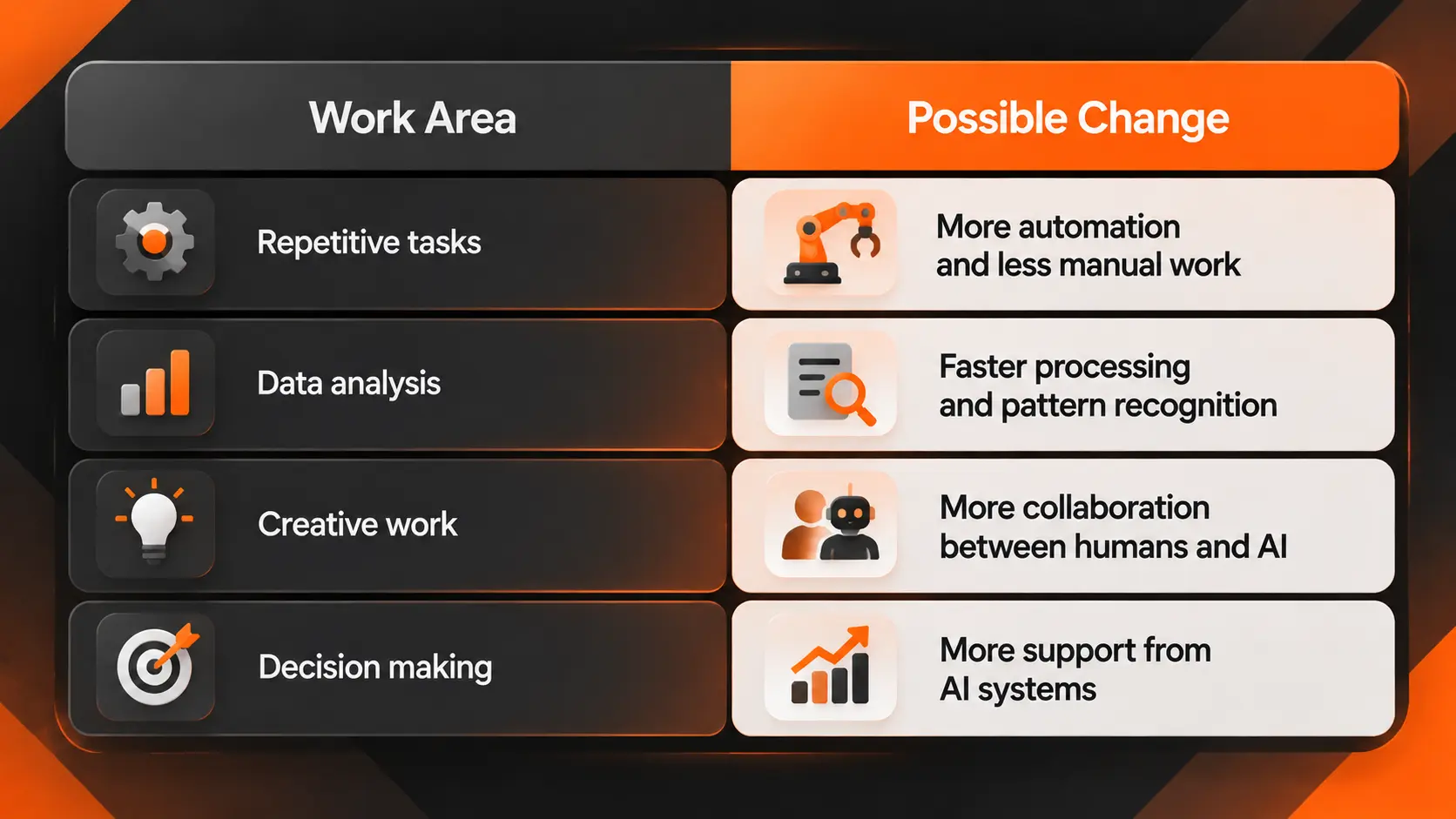
The people who benefit most from AI will not necessarily be those who know every new tool. They will be the ones who understand problems and know how to use technology to solve them.
AI and the Future of Search
Search is another area where AI is creating major changes.
For years, people searched the web by entering keywords and opening different pages to find answers. AI powered experiences are moving toward understanding intent and providing more direct responses.
This changes how businesses think about online visibility.
Creating content only around keywords is becoming less effective. Businesses need to create information that is useful, trustworthy and genuinely answers user needs.
The future of digital content will depend more on:
Real expertise
Clear explanations
Strong topic coverage
Reliable information
As AI systems become better at understanding content, quality and trust will become even more important.
AI Challenges and Risks
The future of AI is not only about progress. There are also important challenges that need attention.
AI systems can produce inaccurate information, create privacy concerns and introduce new security risks.
Another important challenge is responsibility. As AI becomes more involved in business decisions and daily tasks, people need clear ways to review and control its output.
The future of AI will depend on balancing innovation with careful implementation.
Companies and individuals that understand both the opportunities and limitations of AI will be better prepared for the changes ahead.
Preparing for the AI Future
Businesses do not need to wait for a perfect AI system before taking action.
A practical approach starts with understanding current problems.
Before adopting any technology, companies should ask:
Which tasks consume unnecessary time?
Where do employees need better support?
Which processes can become more efficient?
How can results be measured?
The goal is not adding AI everywhere. The goal is finding places where AI creates real value.
Companies that build this mindset will have a stronger foundation as AI continues to develop.
Human Role in the AI Era
The future of AI is not only about machines becoming more capable. It is about how humans choose to work with those capabilities.
AI will continue changing technology, businesses and everyday workflows. But the biggest opportunities will come from people who understand both sides of the equation: what AI can do and where human judgment remains essential.
The future will not belong only to the companies with the most advanced technology. It will belong to those that know how to combine technology with better decisions.
FAQ
Is AI going to become smarter than humans?
AI systems are becoming more capable in specific tasks, but comparing AI intelligence with human intelligence depends on the type of ability being measured. Human reasoning, experience and understanding of complex situations remain important factors.
What should businesses learn before investing in AI?
Businesses should first understand their own processes, identify problems worth solving and define how they will measure improvement before choosing AI solutions.
Will AI create new careers?
AI is expected to create new roles related to developing, managing and applying AI systems. The exact impact will depend on how industries adopt the technology.
How can someone prepare for an AI focused future?
Learning how to work with AI tools, improving problem solving skills and understanding how technology affects different industries can help people adapt to future changes.
Will AI agents replace traditional software?
AI agents are likely to become an important part of software development, but they will not replace every traditional system. Many businesses will combine existing software with AI capabilities.

Fatemeh Jahangard
Technology & AI Writer at PinerookFatemeh Jahangard covers AI, emerging technologies, and digital innovation for Pinerook, focusing on how technology shapes startups and industries.
 Seen first.